I'm a day late on my post, but I have a genuinely good excuse... I thought today was the 15th! ;) Whoops.
A few months ago, I did a post at Operation Awesome regarding copyright issues for authors. We all know what copyright means, but how does it specifically apply to books and covers? BookWorks explains it pretty well on Publishers Weekly (see BookWorks: Understanding Copyright: What Every Indie Author Needs to Know below for the full article):
...it is important to understand how copyright works, and what can be copyrighted and what can’t. Copyright protects “original works of authorship” that are fixed in a tangible form. This includes literary, musical, dramatic, and choreographic works, pictorial, graphic, and sculptural works, motion pictures, sound recordings, and architectural works. As you probably know a copyright notice looks like this: Copyright © (year of creation) (your name).
Here are a few posts I've come across regarding copyrights recently. (If you have come across any other informative posts, feel free to add them in the comments!)
* BookWorks: Understanding Copyright: What Every Indie Author Needs to Know
* Copyright Is Not A Verb via Brad Frazer
* 5 Copyright Terms We Need to Stop Using Incorrectly via @plagiarismtoday
* Book Cover Copycats: Is it Flattery or Copyright Infringement? via Anglea Ackerman at Writers Helping Writers
* Highlights on Copyright & Publishing from the Indie Author Conference via Ruth Carter
Of course, there are many other articles regarding copyrights that you can find with a bit of searching, but these were the ones I found most interesting.
Happy Monday!

Showing posts with label indie publishing. Show all posts
Showing posts with label indie publishing. Show all posts
Monday, June 16, 2014

Thursday, April 17, 2014
Professional Etiquette
I know this is ST's area of expertise--seriously, if you ever need the PERFECT appropriate outfit for any occasion, she's the Indie girl for you to ask--but I thought I'd take a minute to talk about etiquette.
We all know the basics. Don't feed the trolls. Don't respond to negative reviews. Don't over publicize. But let's talk a little in depth.
Reviews:
We're writers. For the vast majority, that means we're also readers. But these aren't just authors any more, they are our colleagues. So you read a book and you don't like it. Do NOT leave a lengthy review detailing why you don't like it. Just check it off your list and move on. I don't even give stars if I can't give 3 or more. Because frankly, I don't want drama that comes with hurt feelings or fans who LOVE the authors I don't. Every book isn't for everybody--that's true when you get reviews as much as it is when you give. But let's all play nice in the sand box, ok?
Social Media Presence:
SOOOOO. We all have one. And that's great. It can be a lot of fun to connect with other authors and fans. And I get it--its your social media. You should be able to post whatever. But you can't. Can we just agree on that? I mean--you can but let's agree that it's a bad idea. Here's a few things I'd suggest you be aware of and avoid.
Politics: Unless you are writing a book about politicians, probably stay away from them. It's a hot topic and quickly devolves into fighting. And it's just not worth it.
Public rants: We all have bad days. We all have days where we want to curse and scream and flail like a five year old. But you are in a professional space here--and I promise that if you throw a public tantrum, people will remember. Your colleagues and peers, and readers. Don't be that girl.
Criticism: We are mostly Indies (And if we're not, we should maybe rename the blog...). We fight an uphill battle. For review and recognition, to be taken seriously, to sell. What we don't need to also fight is each other. So you didn't do a cover reveal. Or pre-release buzz. I might have opinions about that, I'll keep them to myself or have a private conversation. But publicly criticizing the way other people do or don't do things is tacky. And its hurtful, even when you don't intend that. We don't need to do that to each other.
DON'T. BE A DIVA.
No one wants to work with these people. The ones who think they're flawless and their words are amazing and that they can do no wrong. The ones who expect everything while giving nothing. They aren't fun--and they get a reputation for it. It's good to have confidence in yourself and your work. But do it with a dose of humility and the knowledge that you will never have it all down. There is always something more to learn. :)
Basically, friends, it comes down to this. You are a professional. For readers, agents, and other authors to treat you as such, you need to act like it. All. The. Time. So before you drop a status filled with random cursing or post a review about how unstructurally sound a book is--before you post about everything a publisher did or didn't do wrong--stop and think about it.
Keep it classy, y'all.
N~
Wednesday, December 11, 2013
The Debutantes Reflect

While we didn't actually get to dress like this and practice our curtsies, some of the ladies of Indie Ignites became Author Debutantes in 2013. We published our first books and for the first time could call ourselves AUTHORS. So as this auspicious year comes to a close, I thought it would be fun to ask some of my fellow Indie Debs to talk about the experience of launching yourself into the world as a writer. Here's what they had to say, below, but, first, MEET OUR DEBS
JC EMERY released her first novel,
 which is also the first in a series (MEN WITH BADGES). She self-published this as well as her debut novels in the BAYONET SCARS series. It's been a very productive year for JC!
LISA BASSO also debuted with the first in a series; the novel
 kicks off the trilogy THE ANGEL SIGHT SERIES. She's published with Swoon Romance.
I, STEPHANIE WARDROP, brought out the first three in a series of YA e-novellas based on Jane Austen's Pride and Prejudice. The first installment was
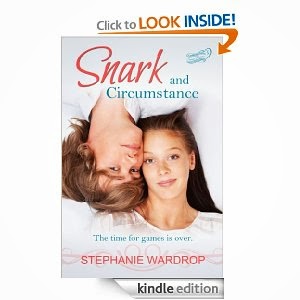 published by Swoon. The last installment releases in January of 2014.
RELEASE WEEK AND BEYOND

I spent so much time worrying about the writing that I didn't really put much thought into what it would be like when the book actually came out (I was just so relieved that it did!). Lisa Basso and I both had blog tours, so we were in the enviable but chaotic position of having to write twenty-plus completely fabulous blog posts in a few weeks. "It was crazy," Lisa says. "I didn't have much time to celebrate [that first week, but after that], man was that sweet." JC had to figure out how to market her book on her own (and let me tell you, she has gotten very good at it), so her release week was "quiet."
But once the book was out and people were actually reading it (squeeeee!), things started to happen. For me, people I hadn't been in contact with for years looked me up on Facebook and everyone was amazingly proud of me and very sweet about congratulating me. Publishing a book is a big deal to people and it's really gratifying to have had so many people happy for me. I also suddenly got to meet (virtually) a whole group of other writers and wonderful bloggers. Lisa agrees, saying. "I've gotten to know so many amazing bloggers, authors, and book lovers I never would have had the pleasure of meeting otherwise. Including the amazing ladies of Indie Ignites." Right back at ya, Lisa!
JC had a few more twists and turns in her year-long journey. I'll let her tell it to you straight, but if you go to Amazon or any other site selling books, you'll see it has a happy ending: Through a strange twist of events, my first book ended up being free for five
months (which I talk about here). It was (in my opinion) a really good thing
for my career. It let people know that I’m here, but it also meant that I was
giving away my work for several months. Because of a shoestring budget, I
wasn’t able to do certain things until my fourth book (Ride, which debuted
October 25th
months for me to consider myself a published author. I kept making excuses
for how it wasn’t really real yet. I even made my mom wait until I was
enough of a success to tell my family. I just didn’t want to fail in front of them,
and since I had very low expectations, I’ve been pleasantly surprised with
what I’ve been able to do.
) like a formal blog tour, cover reveal, etc. It actually took several
BEST PART OF BECOMING A PUBLISHED AUTHOR FOR THE FIRST TIME
JC said "I felt brave. A lot of people thought I shouldn't publish at all, let alone self-publish . . . I've always wanted to be my own boss, and I didn't know that I'd ever be able to make enough money off of a business to truly work for myself . . . but for now I can say that I made my dreams come true in 2013."
For Lisa, the best part was, "hands down, being contacted by a reader who loved my book. There's nothing like it."
WHAT WOULD YOU DO DIFFERENTLY NOW IF YOU COULD?
It seems that we'd do it all over again if we had the chance. JC said "Were there things I could have done better? Absolutely. I made mistakes—
big mistakes—but I wouldn’t want to have done a single thing differently. For
the first time in my life I showed myself how truly capable I am. I’ve worked
harder, taken more risks, and have ventured into areas I didn’t know possible
this year. 2013 has been the best year ever and I wouldn’t change a single
thing."
Lisa had some good advice for newbie authors that I'll share verbatim: "If I could do anything differently, I would keep a journal of the things that came up after I signed
my contract. I'd log how many hours I wrote, edited, and promoted each day." Especially if you are trying to figure out if you can really "afford" to do this, even if you are not planning on quitting your day job any time soon, it's probably a good idea to keep track of all the hours you put into everything in addition to the writing, the marketing, blogging, interviewing, and, with a little luck, red carpet-walking when you sell your book to Hollywood. Hey, 'tis the season to dream big! And this past year, many of our dreams have already come true.

Buy Marital Bitch at http://www.amazon.com/Marital-Bitch-Men-Badges-ebook/dp/B00B687AX0/ref=sr_1_2?s=books&ie=UTF8&qid=1371196872&sr=1-2, A Shimmer of Angels at http://www.amazon.com/Shimmer-Angels-Angel-Sight-Series/dp/0985029439/ref=sr_1_1?ie=UTF8&qid=1386208596&sr=8-1&keywords=a+shimmer+of+angels, and the Snark and Circumstance series at http://www.amazon.com/s/ref=nb_sb_ss_i_0_13?url=search-alias%3Daps&field-keywords=snark+and+circumstance&sprefix=snark+and+cir%2Caps%2C245 . They make excellent holiday gifts :).
Friday, April 5, 2013
Business Plans for Authors
I think it's safe to say that many of you lovely readers are writers. We love words and creating and art. We spend hours, days, weeks, months, and (for some of us) years crafting our perfect book. Sweat and tears (but hopefully not blood) are poured into our work, and we let that creative side roll. It's fun and beautiful and wonderful.
But, unfortunately, that's not all there is to being a writer - at least, that's not all there is to being a published author. Whether you publish with a major Big Six (Five? Four? I can't keep up with the mergers anymore) House, a small press, an eBook exclusive house, or chose to go it alone-ish and self-publish, you are now a businessperson. Yep, that analytical, chart- and list-loving side of your brain finally gets to come out and play. (And if you are one who thinks that side of your brain lay down and died many moons ago, prepare to resuscitate it, because you'll need it now. But don't worry, it won't be too hard.) I'm going to be focusing on indie authors, because - hello! - this is an indie author blog, but I think a lot of this will apply to authors with big houses behind them as well, just maybe with a little tweaking.
Why does an author need a business plan?
Good question; I'm glad you asked. As nice as it would be to be able to just sit at home and churn out words, the reality of indie publishing is that you are no longer just a writer; you are now a writer and a publisher, so all the major business decisions fall on you. I wrote a business plan for my massage studio*; I wrote a business plan for my alpaca farm; it only makes sense that I should write one for my writing and publishing.
After all, this is a business. (Have I drilled that in enough yet?)
So what goes into a business plan?
That really depends on you and how thorough you want to be. My business plan for Metamorphosis Books is twenty-one pages long. Plus I do an additional plan for each individual title. But I'm neurotically organized. It's likely you won't have quite as much in yours as I do in mine. (But if you want an idea of how detailed mine is, check out this blog series by Denise Grover Swank. She laid it out so well, and all I'd be doing is basically regurgitating a lot of stuff she said, and what's the fun in that?) At the very least, I think you need to focus on:
- A vision for your business. (below)
- A production schedule. When will your titles be released? When do you have to reach writing and editing milestones in order to make that happen? When do you need your cover by, and when will you start with promotions and publicity? (I will cover this next week.)
- A financial plan. How much is this going to cost you? What will you charge for your books? Where do your profits go? (I will be covering this in two weeks.)
Let's talk about vision.
What are you hoping to accomplish? Are you just putting out one book, or are you setting yourself up for the future? This is the part of your business plan where it's most important to be totally honest with yourself. Where do you really see yourself going with this adventure? It's okay to shoot high here and to plan for big things to happen. We're all dreamers, and while the nitty-gritty of business planning will ground us a bit in later weeks, we can lay out all our grand ideas here.
But...
Please take the time to reflect and be honest with yourself about what YOU really want. Don't base your plan on anyone but yourself. It's easy to see what everyone else has and to try to go for that as well, but is it what you truly want? Example:
A bit more than a year ago, I was writing up my business plan for our alpaca farm. During the research phase, a lot of really cool things popped, and before long I was incorporating those numbers and ideas into my plan. The alpaca business was so cool! And, man, these people were making BANK.
But they were also dumping a ton of money into their business, giving ultrasounds to their pregnant dams, paying multi-thousand dollar stud fees just so they could get the best names in their pedigrees, traveling around the country ALL THE TIME to go to shows. They were performing monthly weigh-ins on their animals and sending fiber samples off to labs to get histogram readings. (It's okay if you don't know what that means.)
It was easy to get caught up in the excitement and pull of those big numbers, but when I made myself be completely honest about what I wanted, that lifestyle was not it. My husband grew up on a farm and has a livestock background; alpacas are livestock, but these farmers were not treating them this way. I didn't need - or want - the fancy gadgetry and hand-breeding; my animals know how to do the dirty just fine on their own, and their offspring are just as great. I don't need to win awards at shows and to have a piece of paper saying how great my animals' fiber is; the spinners and knitters I sell to don't care what the judges say - they just know good fiber.
Sorry to go all farm-talk on y'all. The point is: it was easy to see what others have and put those ideas into my plan. But when I really thought about it, I realized those weren't the things I wanted. Sure, they were great for those other farms, but just not for me. So now I run a very laid-back alpaca farm, very different from all those I researched before business planning, and I couldn't be happier with it. (Well, I could be happier if that one devil alpaca would stop eating our dog food, but that's beside the point.)
So take some time and think about what you really want out of your writing and publishing. It's fine to look at what others are doing and have accomplished**, but when it comes time to actually write your own plan, first try to put all of those other authors out of your mind so you can meditate on you. Once you figure yourself out, you're ready to write out the vision for your business.
Okay, I think I've gone on about long enough for one blog post. I'll be back next week to talk about production schedules.
Your homework for this week: if you've not yet done this, take some time to sit down and envision what you want from your writing and publishing. Where do you want your plan to take you? (And if you've already done this, take some time to read over what you have and re-evaluate. Are you still in line with what you originally planned? Business plans are fluid. Don't be afraid to change course.)
*This was before I destroyed my right shoulder and effectively squashed a steady massage career.
**It's actually really great and beneficial to research what others have done, and that research will come in handy for later parts of your plan. Just try to ignore the others for this part.
Monday, March 18, 2013
Firing Up the Indie Passion
Words. They're so important. They tell you what to do, how to do it, explain feelings, sights, and sounds. Words can be used in many different ways, in so many combinations it's unfathomable to the human mind. Life without words would... (See? That sentence would be so much better with a word at the end!)
We writers depend on words. We whip them around, smack 'em down, misuse them, and attempt to perfect them all the time. Words come and go and get deleted and revised continually throughout our careers. We celebrate them when they seem perfect (It's gold, I tell ya!"), claim our genius; then months later, go back and delete everything because itwas absolutely horrible wasn't nearly as good as we thought it was. But do we stop? No. There's a desperation embedded into us that compels us to share our words with as many people as we can.
Which brings me to my point: Writing. Rejections. Moving on. Writing more. Rejections. Forms. And so on and so forth. This is what keeps our words from moving on and getting into the reader's hands. And, at the end of the day, that's ultimately what matters, right? Getting our words, our stories, our love of our characters and their predicaments and sadness and celebrations in front of the eyes of the world.
In reality, the writing + editing + queries = big publishing deal!!!!!!! formula isn't so simple; nor is it always an option. A lot more steps are involved in the actual process: work and writing and research and more writing and revisions and edition and so on and so forth and... like I said... after all of that... there's the very real possibility of rejections. Forms. Submissions out for months upon months resulting in... dead ends.
Everyone has a limit as to when they decide they're done with that process. Some quit at 100 rejections; others at 200; some use the ol' I will keep sending queries until the only way they can get me to stop is to ask for a submission theory. (Side note: some never go that route at all and choose to go indie from the very beginning.) I'm not going to tell you my personal story today because I think this photo explains it better:
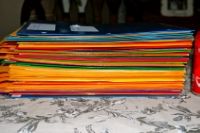
These are my agent/publisherstalker query folders from my first and second MSs. (There's a Coke can to the right of the stack to show you how tall it is--this isn't counting the files I saved online.) Pity Isn't An Option is actually the third MS I completed. The first two didn't go anywhere. I was devastated at first. You see, there's this stigma floating around that writers tend to latch onto. It says, "You don't matter unless a small group of people really high up there in publishing-land decide that you do".
I'm going to let you in on a secret: That simply is not true.
We writers depend on words. We whip them around, smack 'em down, misuse them, and attempt to perfect them all the time. Words come and go and get deleted and revised continually throughout our careers. We celebrate them when they seem perfect (It's gold, I tell ya!"), claim our genius; then months later, go back and delete everything because it
Which brings me to my point: Writing. Rejections. Moving on. Writing more. Rejections. Forms. And so on and so forth. This is what keeps our words from moving on and getting into the reader's hands. And, at the end of the day, that's ultimately what matters, right? Getting our words, our stories, our love of our characters and their predicaments and sadness and celebrations in front of the eyes of the world.
In reality, the writing + editing + queries = big publishing deal!!!!!!! formula isn't so simple; nor is it always an option. A lot more steps are involved in the actual process: work and writing and research and more writing and revisions and edition and so on and so forth and... like I said... after all of that... there's the very real possibility of rejections. Forms. Submissions out for months upon months resulting in... dead ends.
Everyone has a limit as to when they decide they're done with that process. Some quit at 100 rejections; others at 200; some use the ol' I will keep sending queries until the only way they can get me to stop is to ask for a submission theory. (Side note: some never go that route at all and choose to go indie from the very beginning.) I'm not going to tell you my personal story today because I think this photo explains it better:
These are my agent/publisher
I'm going to let you in on a secret: That simply is not true.
Indie Ignites is here to shed light on this untrue rumor. We are here to inspire writers to be writers, and get their words into the reader's hands. We're also here to lift those of you stuck in the going nowhere process out of your ruts, dust you off, and send you on to the next part of your process. To keep that passion for writing ignited, to assure you it is okay to take the "indie" step.
We encourage you to submit to a smaller press. We accept you whether you have an agent or not. We support your choice to self-publish your book. We want to fire up that passion for indies everywhere and, hopefully, make that passion spread like... wildfire.
To those of you who are frustrated, who feel less like people and more like nobodys in your writerly process, or feel all alone, or aren't sure where to go, or still feel that pang of unworthiness when you tell someone you're indie published, we're here to tell you we've all been there--and you don't have to feel that way any longer.
Hence the author interviews. The book reviews. Stories about our own personal journeys. We are here to bring indies together and spread the word that being indie doesn't make you "not as good", it only makes your journey a little different.
So, wherever you are in your journey, take that next step. Get beta readers, get to editing. Listen to your heart and submit to the places you feel you should; research publishers of all sizes (take your time) and let the pros and cons speak for themselves. They're your words, and the steps you take to get them to readers is your decision.
Know that we get where you've been, and are okay with where you are going. And, most importantly, no matter what you choose to do in the end, we're here to support you.
 Jessica resides with her husband of over fifteen years, three awesome daughters, and a plethora of pets in Central California, where fog, frost, triple-digit heat and various items of produce arrive bountifully, depending on the season. She loves owls, drinks coffee like a champ, and reads and writes (mostly) YA fiction. Pity Isn't An Option is her debut novel.
Know that we get where you've been, and are okay with where you are going. And, most importantly, no matter what you choose to do in the end, we're here to support you.
*****
Jessica resides with her husband of over fifteen years, three awesome daughters, and a plethora of pets in Central California, where fog, frost, triple-digit heat and various items of produce arrive bountifully, depending on the season. She loves owls, drinks coffee like a champ, and reads and writes (mostly) YA fiction. Pity Isn't An Option is her debut novel.
Jessica would love to connect with you on her blog, Twitter, Facebook or Goodreads. You can also find her on Smashwords and Amazon.
Subscribe to:
Posts (Atom)